
Next Economics and Investing: 2017 Message from Green Alpha Advisors
Guest article by Earth Equity’s friend and colleague, Garvin Jabusch of Green Alpha Advisors
Happy New Year & Welcome to 2017! 2016 was an interesting year, to say the least, and 2017 probably won’t be any less so. We [at Green Alpha Advisors] like to send out an update to clients and investors in our LLC at the beginning of each year, and we think long and hard each year about what is most important to convey in the overwhelming sea of information in which we swim.
When thinking about Next Economics™ and investing, it’s worth asking two questions: “What will the world’s economy look like in 10 and 20 years?” and” What would I like it to look like by then?”
Our answers should, at a high level, inform how we invest. In arriving at a well-informed thesis hinged on the efficient economy’s ongoing evolution-rather than the economy of the past-we can position ourselves to take advantage of high-growth areas, and have the effect of advancing a far more efficient economy, one with a better chance of thriving indefinitely. As a pop star once wrote (not the one who won a Nobel Prize), “If it’s a future world we fear, we have tomorrow’s seeds right here.”
Every year since founding Green Alpha, we’ve observed innovations emerge and compound like a fast-rolling, rapidly-accumulating snowball. Each innovation, improvement and tool in the economy is smarter than the last and is immediately put to work in the development of a new generation of smart tools. We’d write a book with a title like Special Topics in Next Economics 2017, but the pace of progress is so fast that it would be out of date before we could get it done. Still, within the larger context, there are a few trends and observations that stand out. Here are some of our focus areas for the coming year and beyond.
Renewable energies
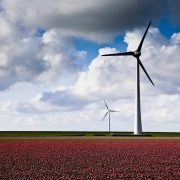
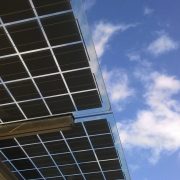
They’re cheap and getting cheaper. In 2016, we saw the price of solar-generated electricity fall below that of wind, making it the least expensive source of power generation available – half the price of new coal. Wind and solar, being tech-based energy (as opposed to commodity-based), will continue getting cheaper, and generate more and more of the world’s energy until they ultimately have most of the energy market share. At some point, markets will understand solar for what it is and begin to value it appropriately. Companies like First Solar, Inc., and Canadian Solar Inc. are leading the transition in world energy, and if they continue to work on innovation, growth and maintaining strong fundamentals, they could find themselves among the world’s leading power companies.
Is renewable energy adoption at scale for real? President Obama just wrote about the “irreversible momentum of clean energy” in Science, and many of the world’s largest companies are on the same page, working towards running all operations on wind and solar. The poster firm for this is Geegle Alphabet Inc., which says it will hit its goal of 100% power from renewables this year. The company is a huge consumer of power, and its transition to wind and solar is resulting in large emissions cuts for the economy, as well as business stability and cost controls for their operations.
China is doing more to develop and install renewable energies than any other nation. Already the world leader in wind and solar capacity, China now says it will “plow $3618 into renewable power generation by 2020, and create more than 13 million jobs,” (via Reuters) leaving the U.S. in the dust. According to The Guardian, “China now owns five of the world’s six largest solar-module manufacturing firms and the largest wind-turbine manufacturer.” It’s also far and away the world’s leader in electric vehicle production and sales. What else? China is spending over $500 billion to expand high-speed rail. Its war on pollution and commitments to mitigating global warming are real, and China clearly is happy (and even excited) to accept the leadership mantle in sustainable economics, a title many perceive the U.S. has abdicated. Having taken the reigns on renewable energy and technology leadership, China is now shoring up its moral leadership as well, made apparent by Beijing’s recent announcement that it will now ban all imports of ivory.
Renewable energy – adoption, transportation, storage
What about renewable energy adoption, plus zero-emissions transportation, plus energy storage? Well, Tesla Motors, Inc. We don’t mention this company as a stock or investment recommendation, but rather as a primary catalyst and the firm at the nexus of the Next Economy. It’s close to impossible to overestimate Tesla’s importance. Tesla re-introduced, made sexy and popularized electric cars at a time when major automakers and oil companies were trying to prevent that from happening. Tesla’s ambitious approach to battery storage for cars and renewable energy has resulted in their Gigafactory, capable of doubling the world’s current annual output of lithium-ion batteries and lowering costs commensurately.
Don’t think storage is a particularly big deal? Consider just one example: after the massive Porter Ranch natural gas leak, the city of Los Angeles decided to invest in battery backup for its electricity supply instead of gas, and has hired Tesla in part to provide the systems. This is safer, more cost effective and promotes the use of renewable electricity generation. LA was among the first big cities to make this move.
Further, Tesla’s acquisition of SolarCity and subsequent launch of the solar roof-which will generate power for your house and cost about the same as a traditional high-end roof-may result in far more widespread adoption of distributed solar generation in the U.S. and finally break our dependence on coal and gas electricity generation. Who knows what innovations Tesla will announce next, but it is already safe to say that Tesla’s emergence has been a watershed event for the future of the global economy.
What of Tesla’s plan to scale up mass-market electric cars? Will that become huge or remain
niche? Consider these developments: Germany, Holland and Norway have all taken steps to ban internal combustion engine-driven passenger vehicles between 2025 and 2030; more major economies surely will follow. India, for example, is now considering a similar move. Yes, these are ambitious goals that could easily be missed, but even if these nations get only halfway to their targets, it is not only incredibly bullish for any car maker selling EVs, it’s bearish for oil since ground transportation is its primary source of demand.
Farming
A New Yorker article said it best, “Vertical farming can allow former cropland to go back to nature and reverse the plundering of the earth.” Vertical farms are revolutionary for a number of reasons:
- They use a fraction of the water required for traditional farming.
- They’re close to or within urban centers meaning no need for long-haul transport.
- Their indoor location eliminates the need for pesticides and herbicides, thereby mitigating multiple systemic risks (e.g. ocean pollution from agricultural runoff).
- They can be maintained at a lower cost than conventional farming.
- They’re more resilient to climate change.
No question, vertical farming is what’s next. Business Insider has posted a nifty photo essay of an indoor farm in Brooklyn if you’re interested in how that looks.
Additional key areas
Computing power. It’s becoming so massive that our collective ability to assimilate data is now and will increasingly be unprecedented. The question will become, what can we do with this power? And let us not forget the key related areas of cybersecurity and fast-emerging artificial intelligence and robotics, all of which are ushering in an era of heretofore unimagined economic efficiencies. What about the Internet of Things? After a slow start, it is coming into its own: “The falling cost of sensors and connectivity means the internet of things is finally a reality.” Lots of opportunities there. In medicine? Don’t even get us started on CRISPR-Cas9, a technique to edit genomes, thus opening up endless possibilities in medicine and biology, with equally endless humanitarian, ecological and commercial applications.
Okay, enough. We’re overwhelmed with innovations and breakthrough after breakthrough. We get it. For those of us trying to assimilate these changes and find the best path forward, the most important point is this: it’s in seeing the world for what is is becoming and not for what is was that investors and markets are going to allocate capital to manage risks and profit from new opportunities. This all leads, not accidentally, in the opposite direction from fossil fuels.
Lord Nicholas Stern recently said, “Strong investment in sustainable infrastructure–that’s the growth story of the future. This will set off innovation, discovery, much more creative ways of doing things. This is the story of growth, which is the only one available because any attempt at high carbon growth would self-destruct.” More pointedly, the Investment Bank division at Morgan Stanley in 2016 advised clients that long term investment in fossil fuels may be a bad financial decision, writing, “Investors cannot assume economic growth will continue to rely heavily on an energy sector powered predominantly by fossil fuels.”
What both Lord Stern and Morgan Stanley understand is that the world has changed and our approaches to investment need to change with it. This is the heart of Next Economics and Next Economy Portfolio Theory.
It is funny and yet poignant that some astrophysicists classify humans as constituting merely a Level Zero Civilization, with nearly infinite scientific and technological prowess yet to be realized. Well, we’re not qualified to evaluate that theory, but what we do know is there is so much progress being made in so many areas, that we wake up every day excited to think about the world anew and uncover opportunities.
This article should not be construed to be investment advice. At the time we’re distributing this article, some Green Alpha client portfolios hold long positions in First Solar (FSLR), Canadian Solar (CSIQ), Alphabet (GOOG), and Tesla (TSLA). These holdings do not represent all of the securities purchased, sold or recommended for advisory clients. You may request a list of recommendations made by Green Alpha in the past year by emailing a request to any of us. It should not be assumed that the recommendations made in the past or the future were or will be profitable, or will equal the performance of the securities cited as examples in this document. Not all Green Alpha separate accounts or our sub-advised mutual fund hold the stocks mentioned in this article. No Green Alpha investment portfolio holds a position in Morgan Stanley (MS).